
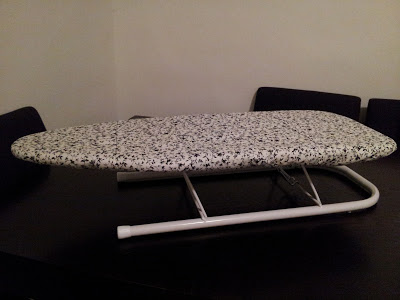
Is your ironing board cover gross, old, boring, or otherwise unworthy of you and the excellent projects you create? Are you like me and you bought a cheap ironing board from Walmart and now everything you iron has a grid seared into it, and you’re beginning to casually question your life choices?
My name is LC, and I have a solution for you, friend.
Today’s blog post is a tutorial to make an easy ironing board cover.
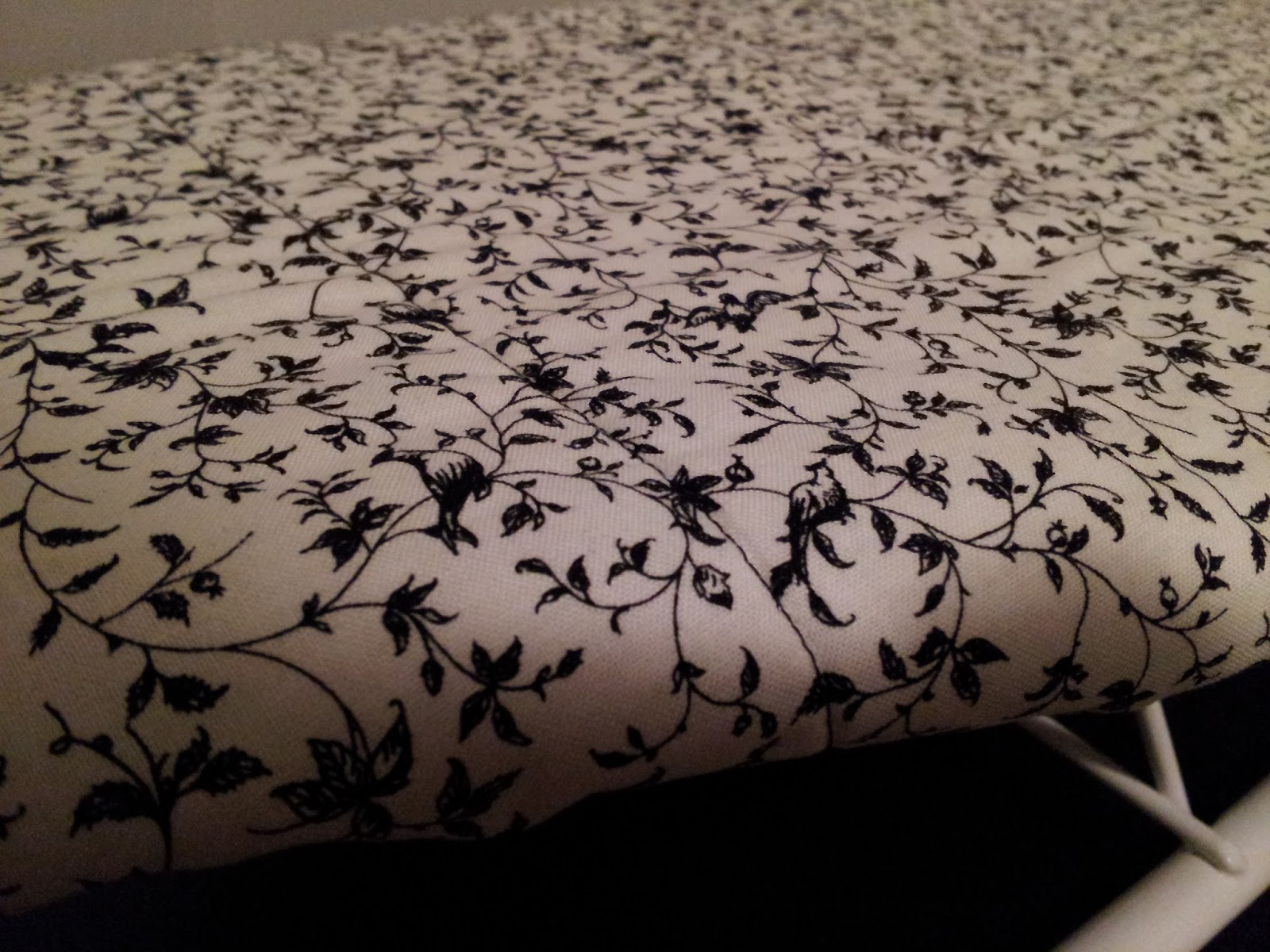
Supplies
100% cotton fabric
Amount
A rectangle the size of the length and width of your ironing board + 6″ (15 cm) for both length and width.
Notes
You can use any material made of 100% natural fibres (linen is another good option, although there’s less selection than with cotton) as long as it lies flat.
I would avoid fabric with cheap metallic or sparkles on it. High-quality metallic cottons, like what you get from Northcott or Camelot might work. I would probably test them under an iron first.
Heat resisting or insulating batting
Amount
A rectangle the size of the length and width of your ironing board, plus 4″ (10 cm) for both length and width.
Notes
I used one layers of insulated batting, but keep in mind that I just added to the cover already on my ironing board. If you cannot salvage the insulation from your original cover (usually looks like foam), you might want to add a second layer of batting. You can use just plain, cotton batting for the second layer, if you want.
Alternatively, if your current ironing board cover is thick enough, and you just want to cover the fabric, you don’t need to use any batting at all.
Cording
Amount
The perimetre of your ironing board + 2′ (60 cm)
Notes
Preferably cotton and thin. Pictures of what I used
below.
Straight Pins
I would suggest glass-headed or another variety that you can iron over.
Matching cotton thread
A good brand like Guetterman or Mettler. Should be 100% cotton, as synthetic fibres may lose strength or even melt when exposed to high temperatures from an iron.
Fabric marker or chalk
Preferably one that disappears or washes out, but not necessary. All markings in this tutorial should be on the wrong side of the fabric.
Measuring tape
Optional, if you’re confident eyeballing 1 or 2″.
Your ironing board
You’re going to use it an a stencil.
Curved safety pins or 505 spray
Optional. You can quilt the batting to the fabric, which is highly recommended if you plan to wash your cover in the future or if you use a cotton/wool batting.
Instructions
1. Cut your batting
Lay your ironing board on top of your batting and use a marker/chalk to create an outline 2″ (5 cm) from the edge of your board. Cut this outline out. Repeat if using more than one layer of batting. (You can eyeball this, if you’re confident, or you can measure it out)
2. cut your cover fabric
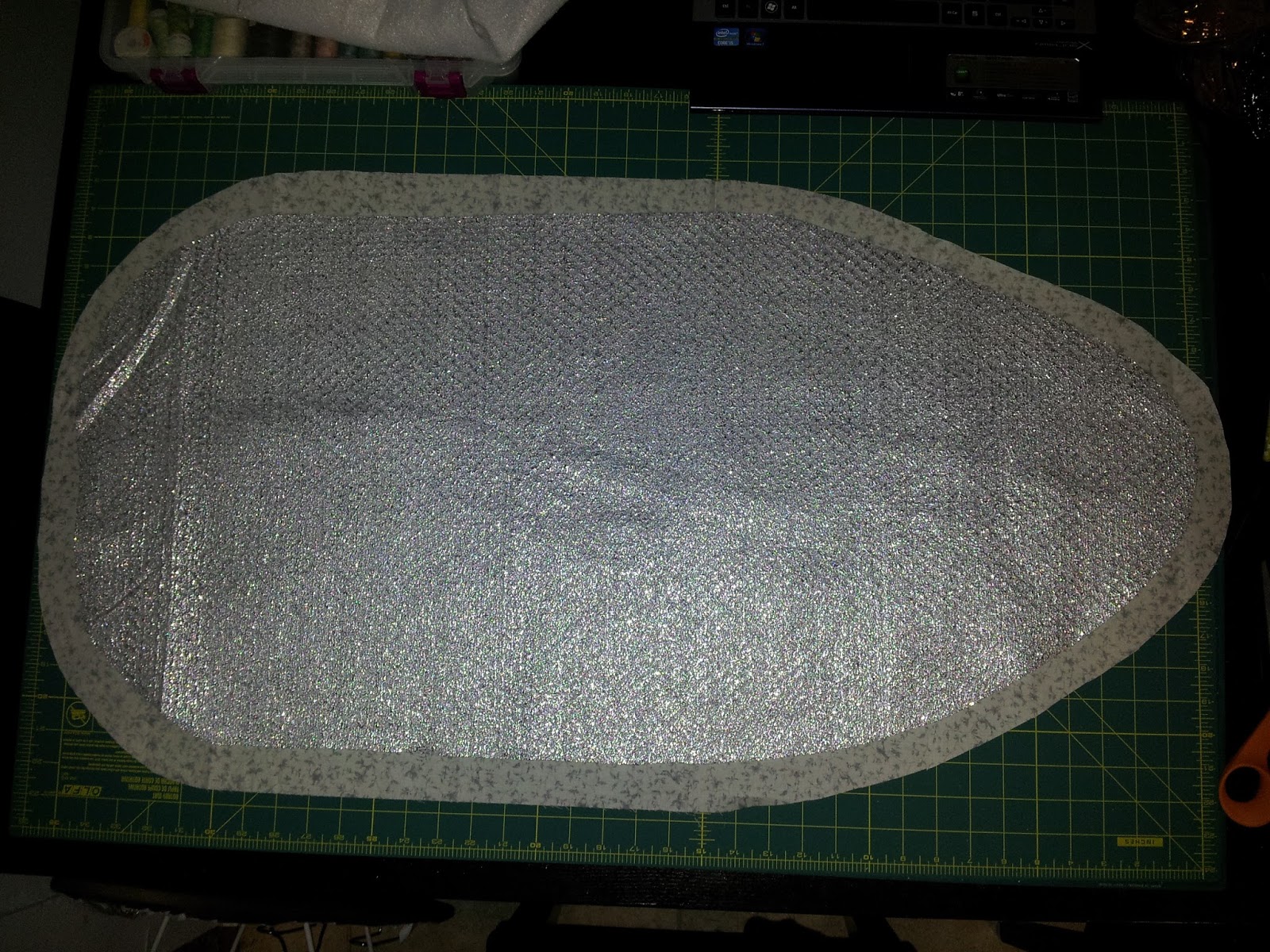
Now lay your batting onto the wrong side of your fabric and use your marker to create an outline an inch larger than your batting stencil. I would suggest putting the shiny side down, if your batting has one (the opposite of what I did in the picture) in case your stencil isn’t quite symmetrical (it’s fine if it isn’t).
3.Hem your fabric
If you know how to hem, then do a 1/2″ hem around the entire perimetre however you think best and skip to step 4.
If you need a bit more direction, read the rest of step 3. (This isn’t the only way to hem, it’s just the easiest, assuming you don’t have any fancy tools).
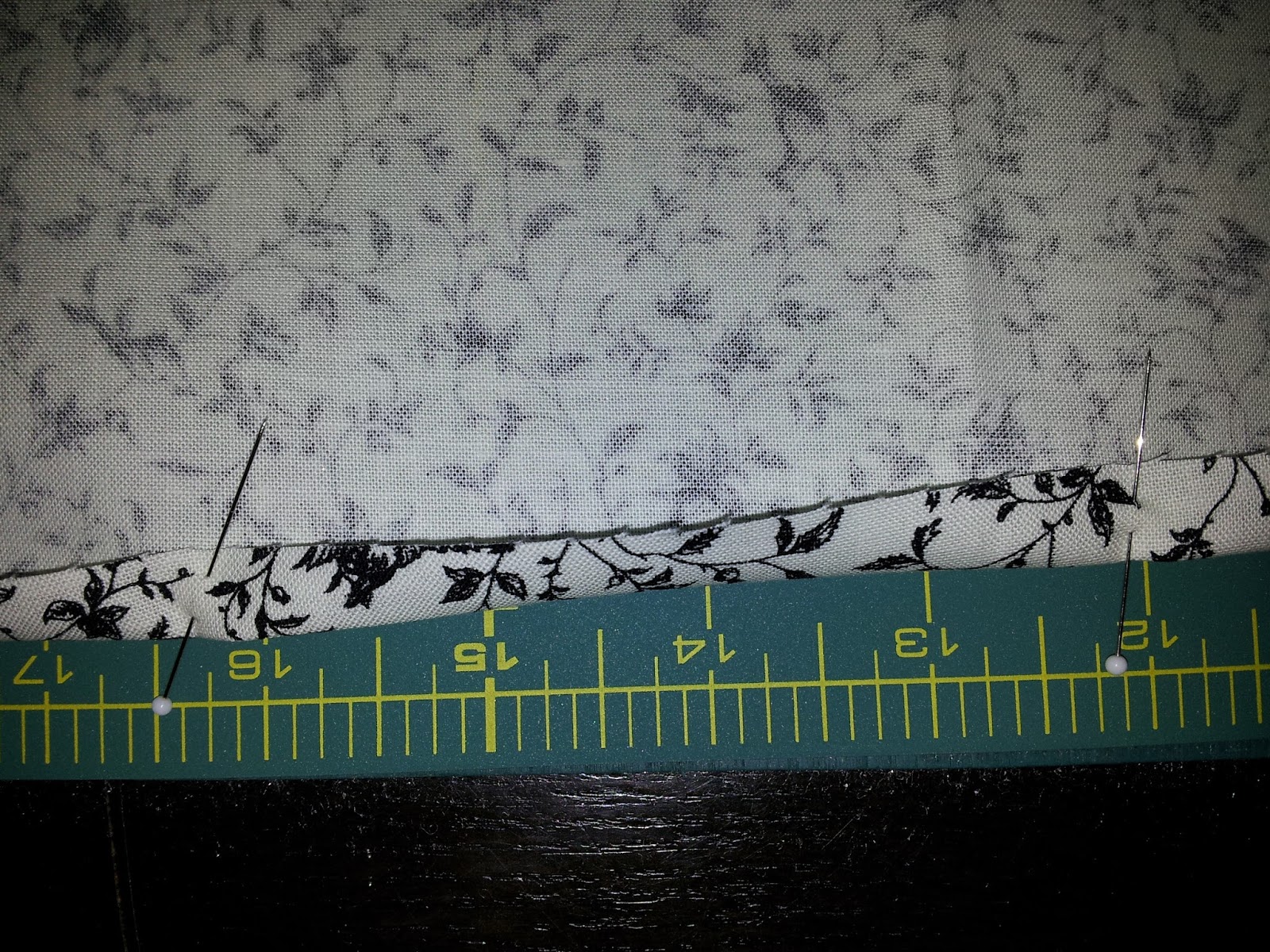
Fold the edge of the fabric in by 1/2″ and pin it in place. Do this around the entire perimetre of the fabric cut-out.
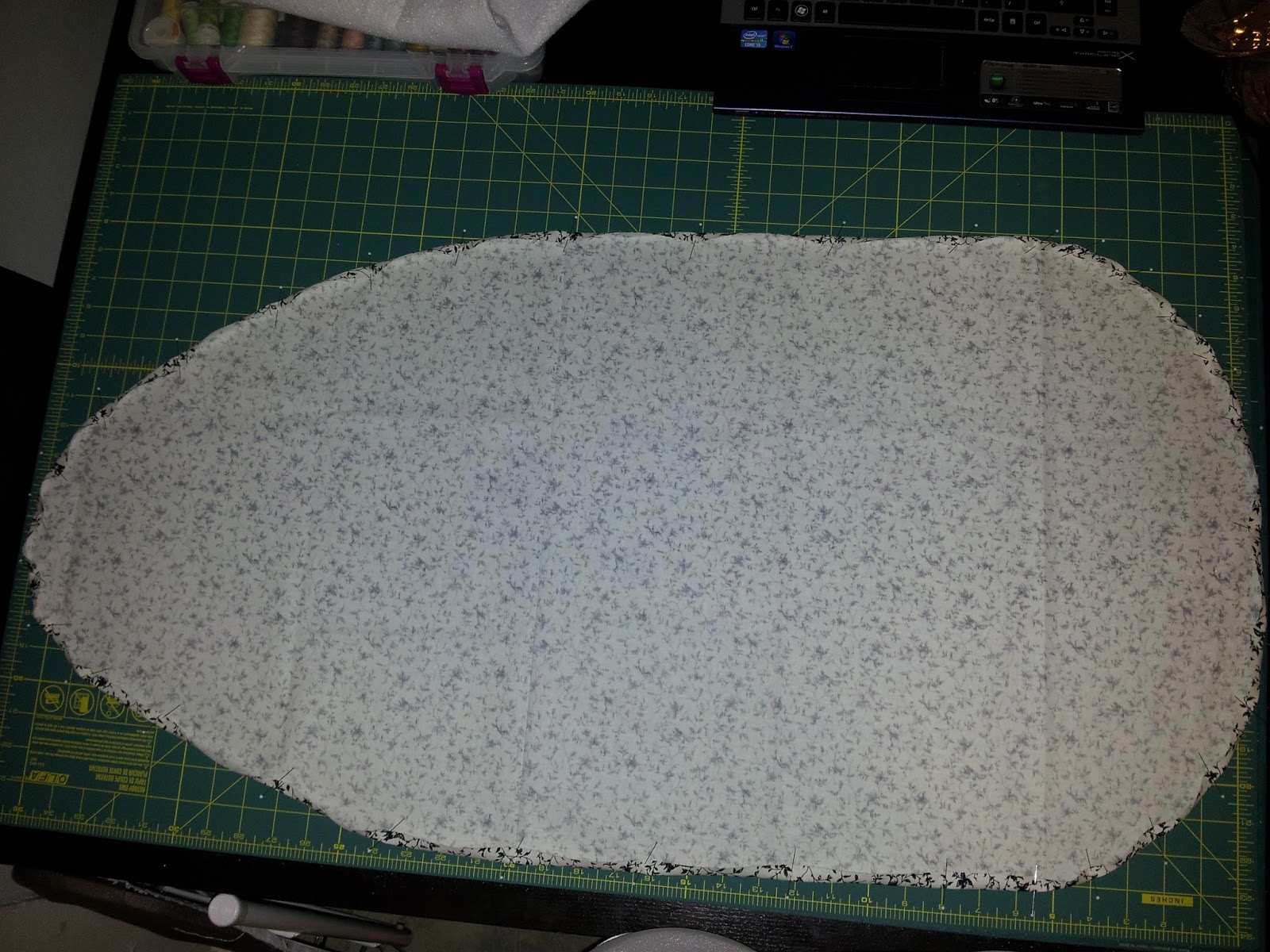
If you used glass-head pins, press (iron) the hem in place and then sew it. If you don’t have iron-friendly pins, sew and then press.
4. Quilt your cover
You MUST centre your batting in your fabric and sew a perimetre around your batting to connect it to your fabric. Anything more is optional, but highly recommended if you used cotton batting or you plan on washing your cover in the future. (If you do more quilting, sew the perimetre last)
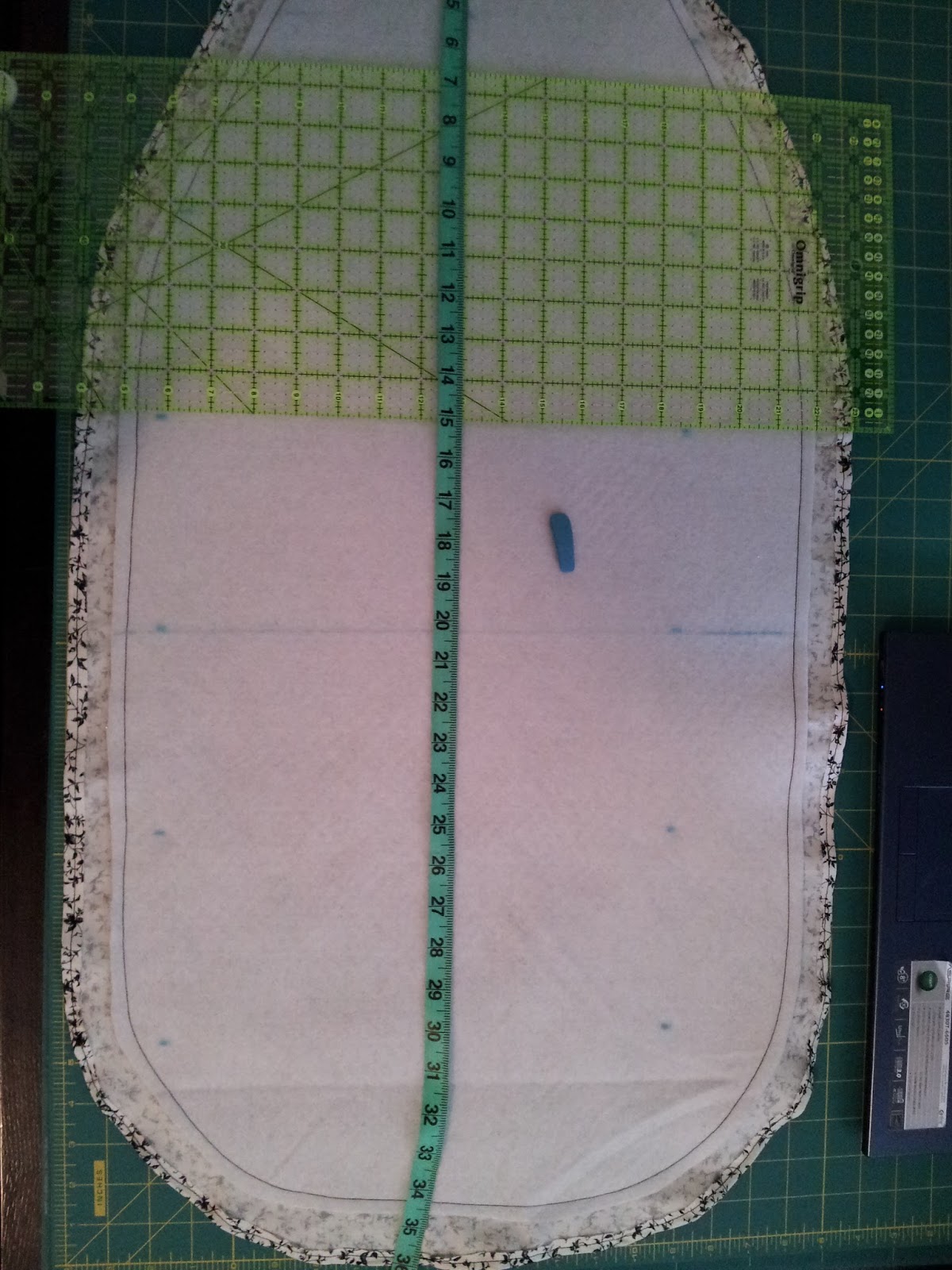
I just quilted straight lines every 8″, because I only used one layer of insulated batting. If you’re using a different type of batting, you will likely have to do more quilting. Follow the guidelines for your brand of batting.
Whatever quilting you end up doing, you should pin the shiny side of the batting to the wrong side of the fabric (you can also use 505 spray, if you have it), before quilting, to avoid shifts or bubbles as you quilt. Curved safety pins are nice for this.
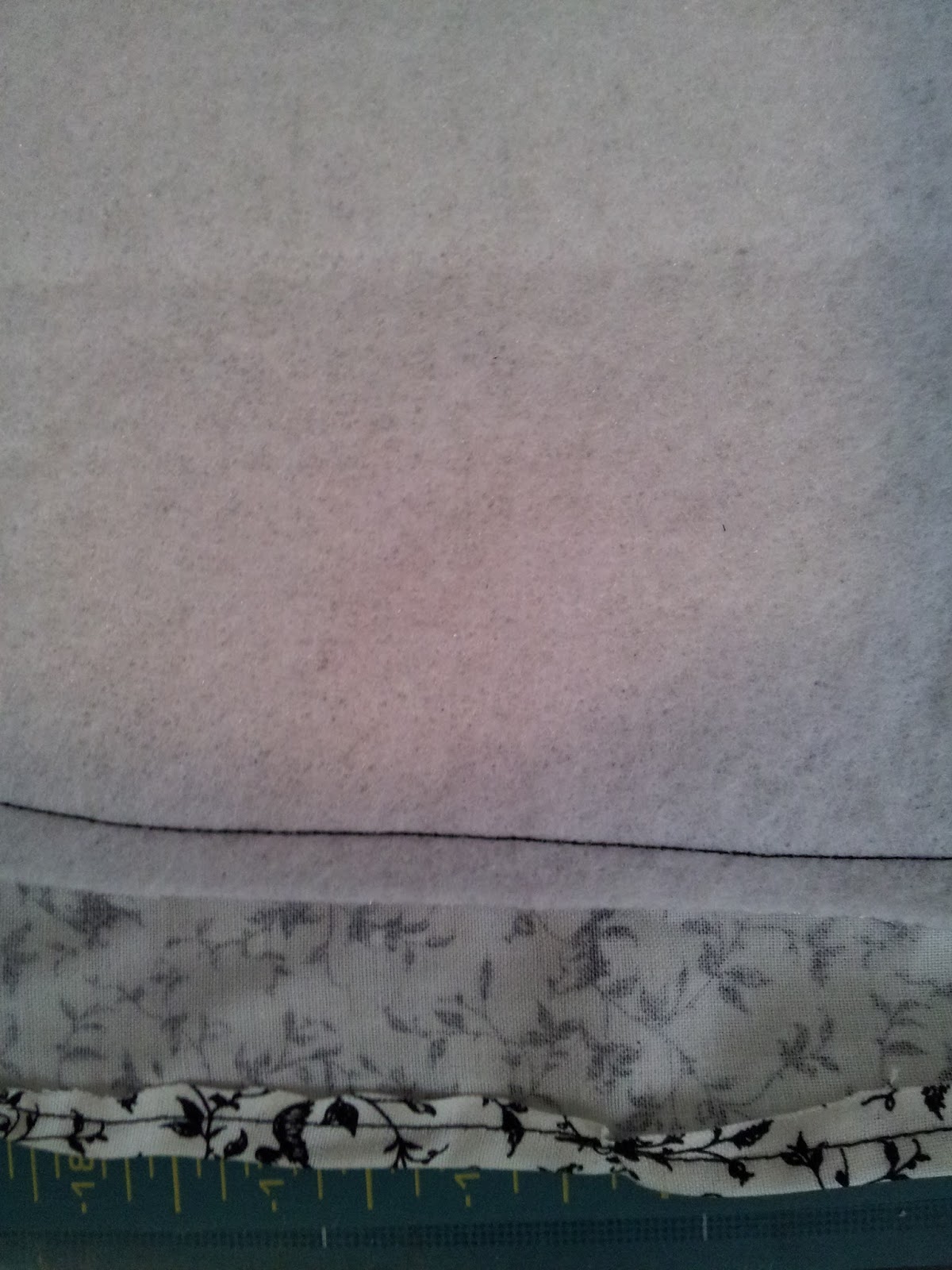
I didn’t find it necessary, but if your batting is thick, a walking foot might help with this step.
5. Place your cording
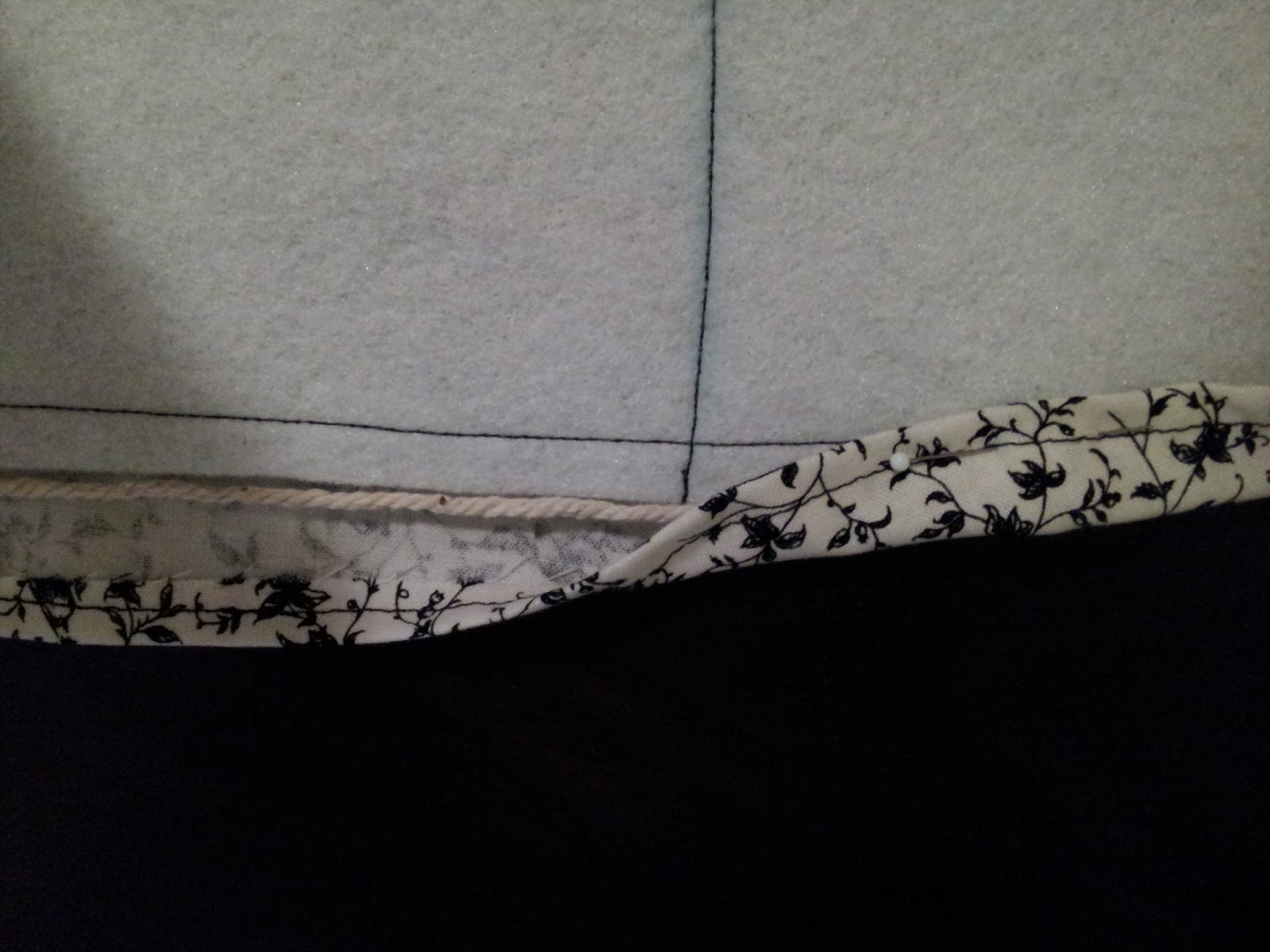
Like so, around the perimetre of the cover.
6. Pin the Cording Sleeve
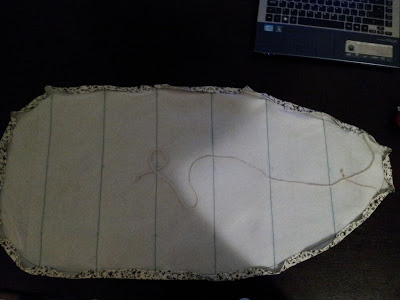
Even if you’re the type of person to forego pinning, you still might want to in this case, since pinning makes it easier to ensure you’re never accidentally sewing over the cording in the next step.
7. Sew the Cording Sleeve
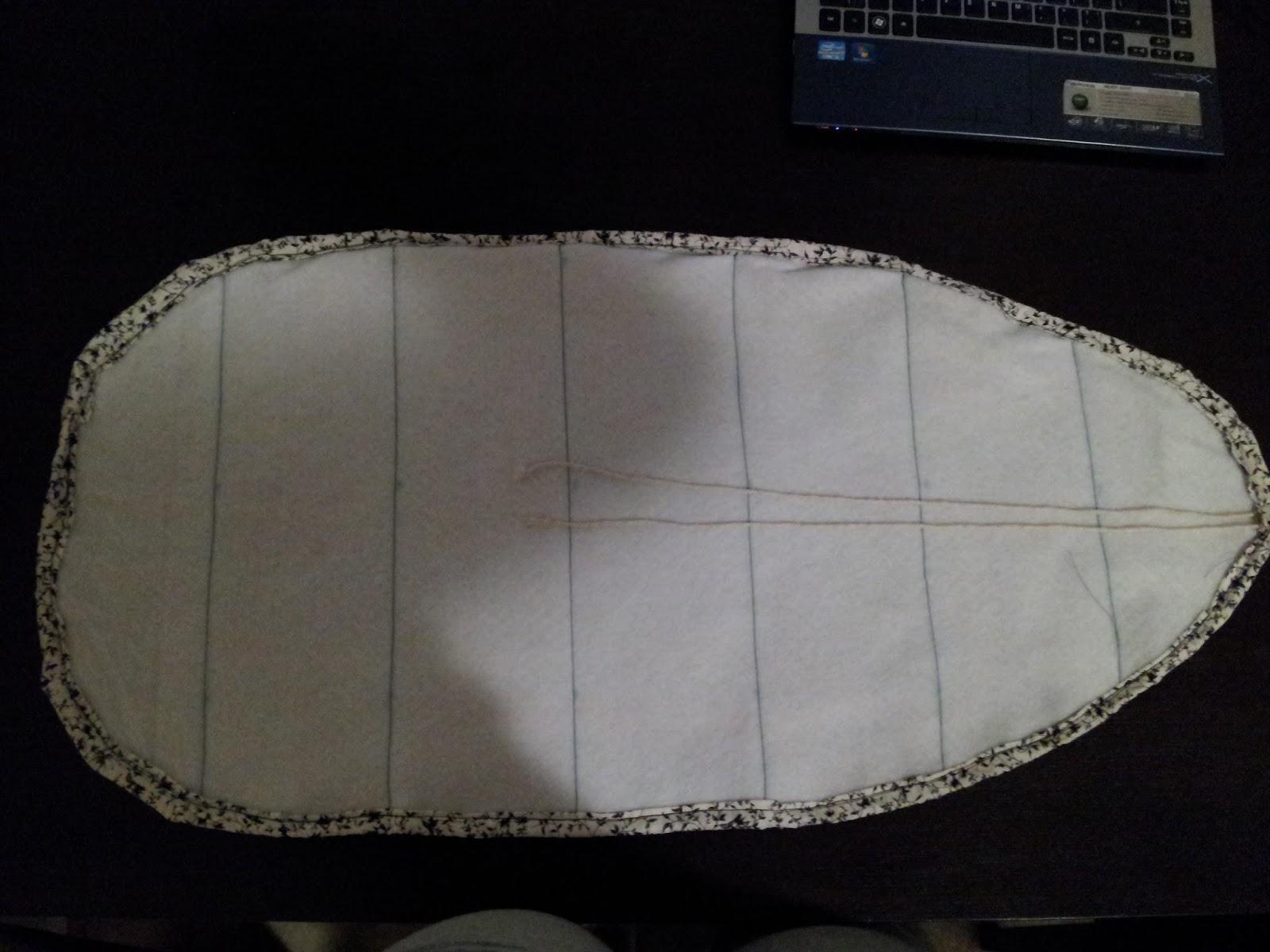
Like so. Make sure you’re never sewing over the cord.
8. Assume the Position
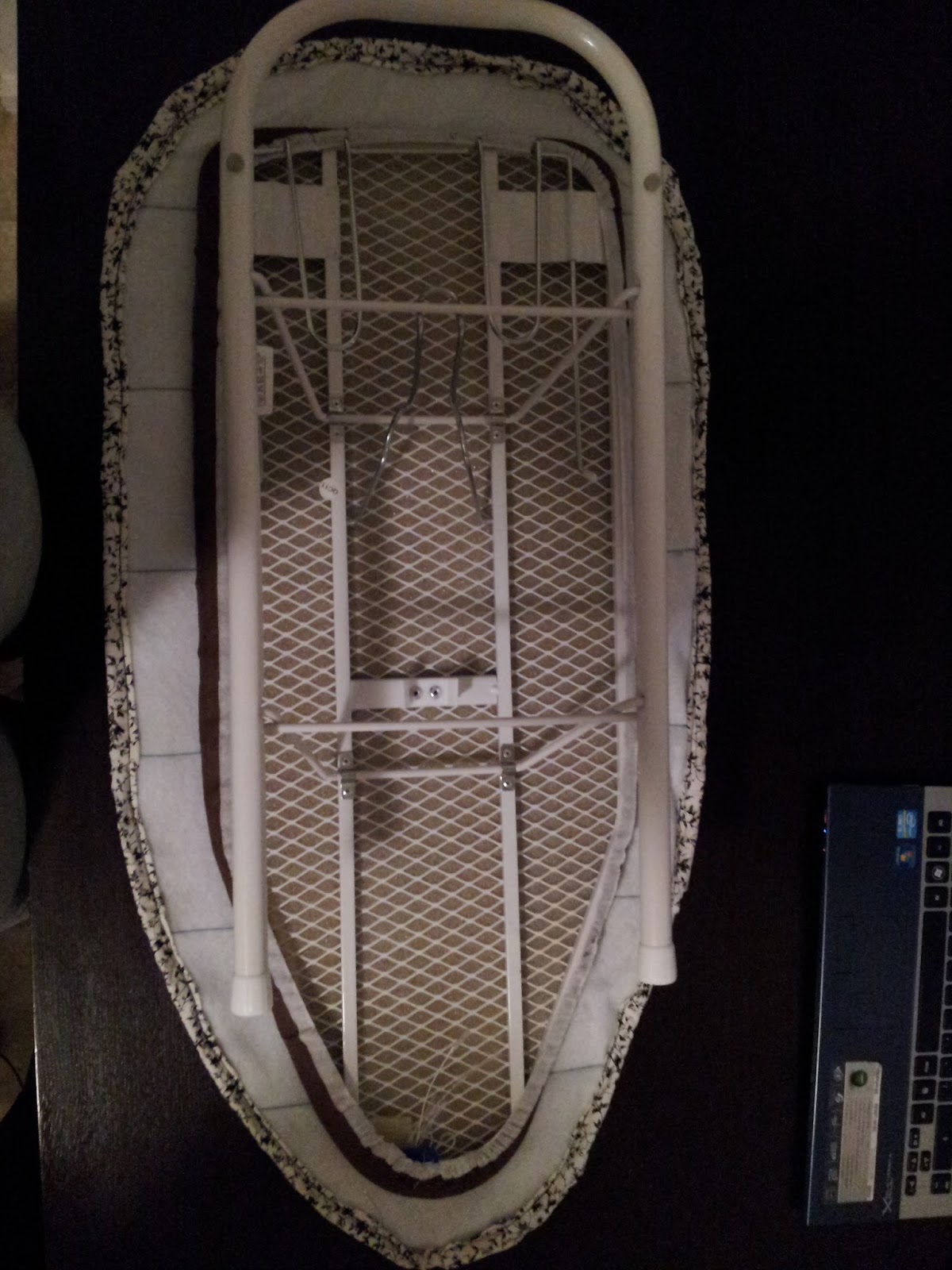
9. Tighten & Tie the Cord
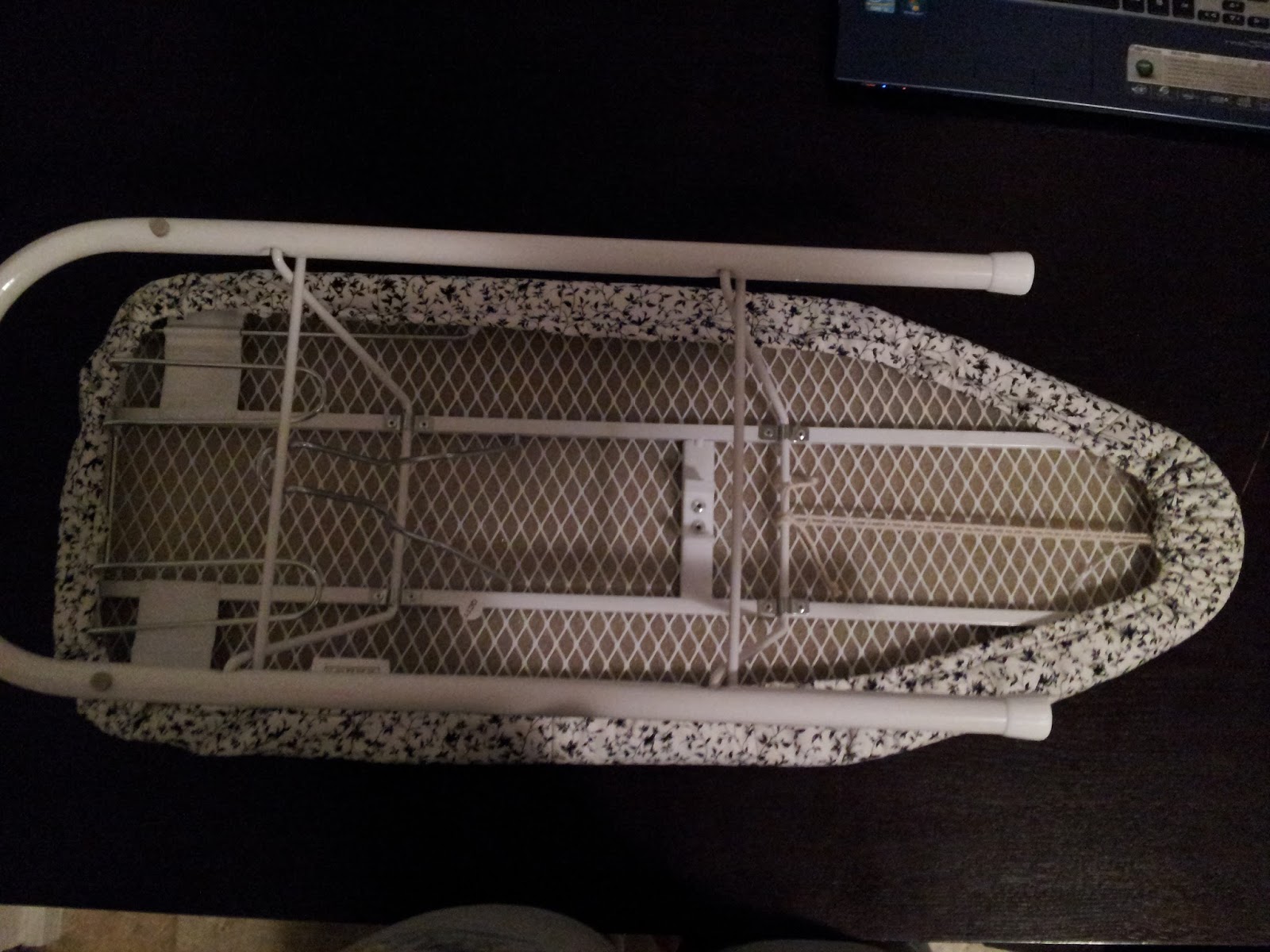
Try to hold your ironing board still as you pull on the cording, eventually tightening the cover to your ironing board. Make the cord nice and tight and then tie it off. I tied my cording to the ironing board frame, because I don’t like to have things dangling.
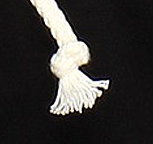
You’ll likely want to tie knots at the end of your cording and/or use fray check or glue to keep the very tip from fraying. I didn’t take a picture of mine, but here’s one from Google that’s tied without fray check (which is acceptable):
You’re Done!
Enjoy the fruits of your labour.
Don’t hesitate to comments with questions, concerns, or compliments.
Or even better yet, if you make an ironing board cover with this tutorial, send us a picture so we can be happy with you OR post a picture on social media using the #misswinnie hashtag and we’ll see it.
And, if you’re so inclined, check us out on Facebook, Instagram, and (soon) Pinterest for more pics, anecdotes, and patterns.
If you want more interesting patterns with better instructions, check out the Miss Winnie Etsy shop.
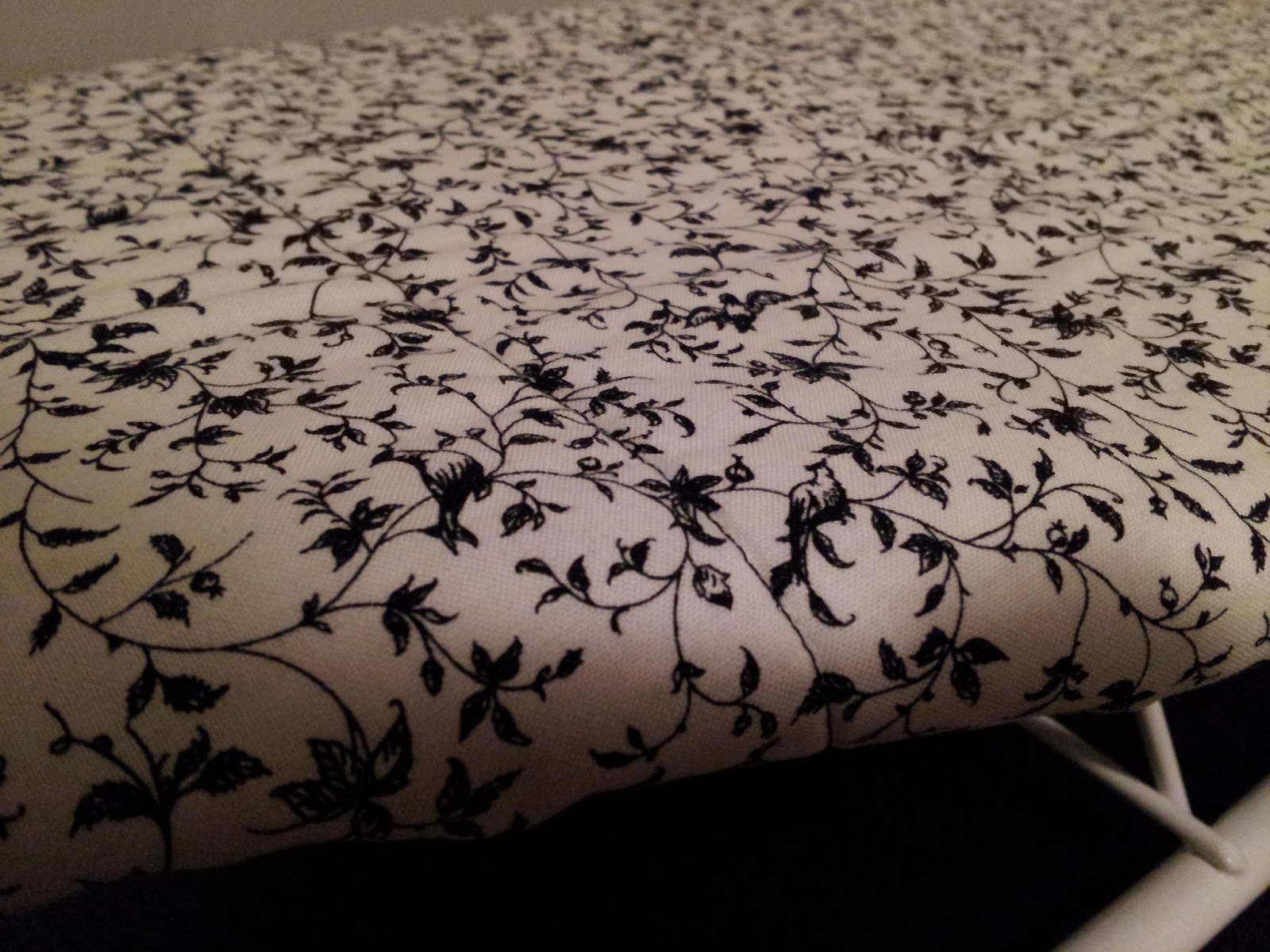
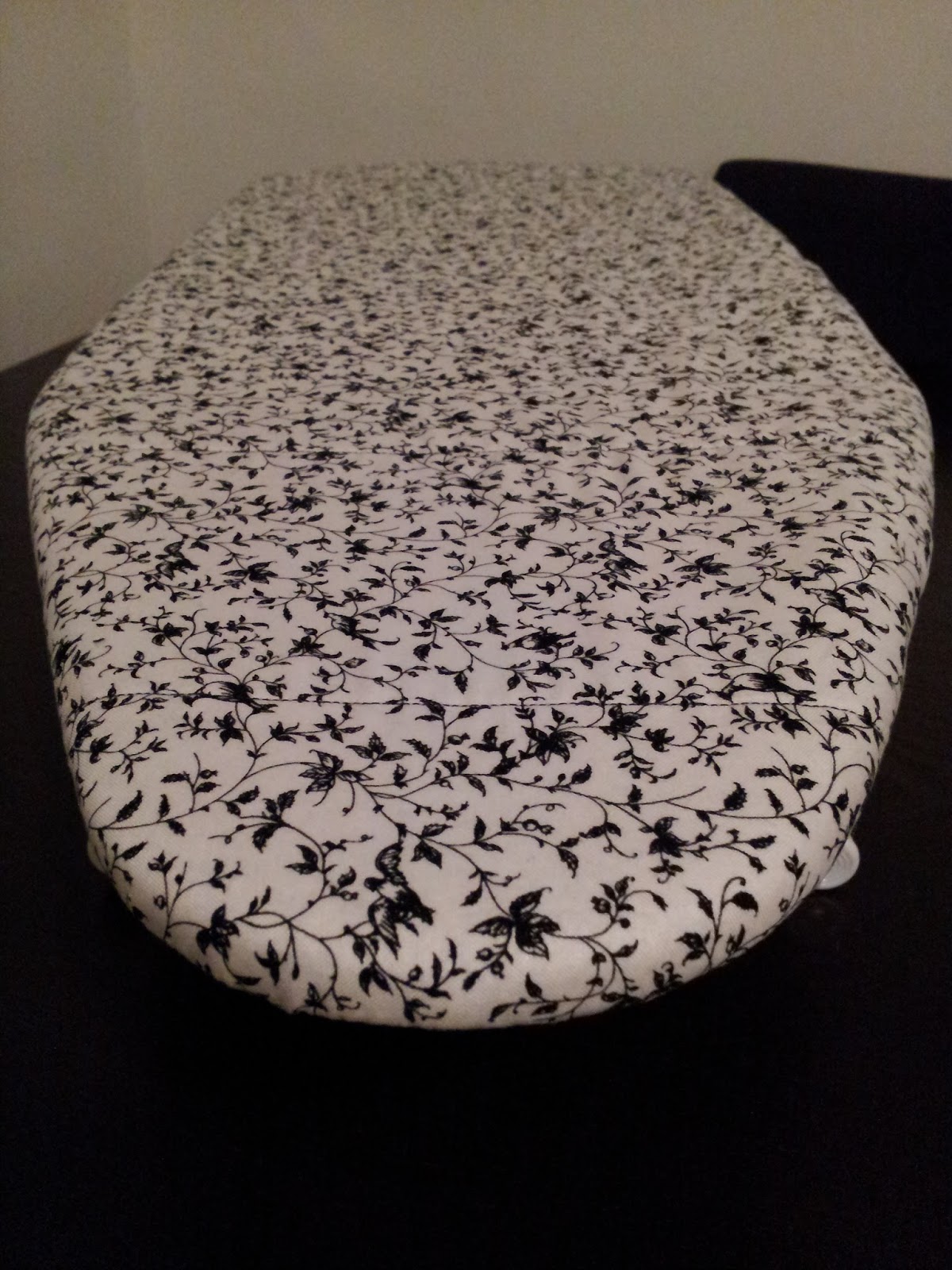
I chose this fabric because it’s off-white and looks antique. I figure that, as I spilled Best Press and what-have-you on the cover, it would just add to the antique look.
 misswinniedesigns